
Land investing in the American Southwest often gets grouped into one broad narrative—cheap desert land with long-term upside. But that generalization misses a critical reality: Arizona and Nevada follow fundamentally different appreciation paths. Understanding those differences is where smart investors separate opportunity from speculation.
While both states benefit from population growth, migration trends, and business-friendly environments, the mechanisms driving land value—and the timelines attached—are not the same.
Arizona: Expansion-Driven Appreciation
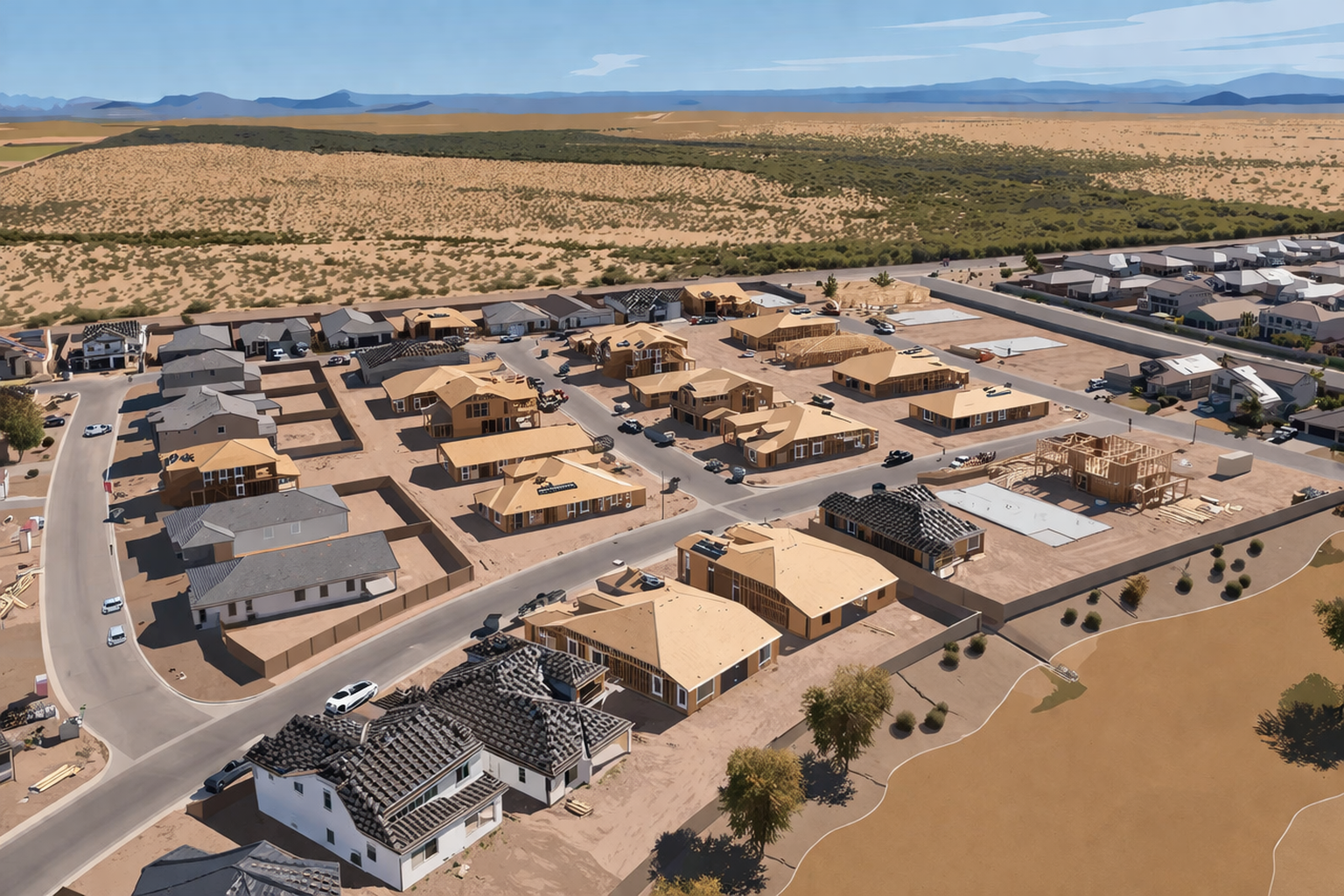
Arizona’s land appreciation is primarily fueled by outward expansion. Cities like Phoenix and Tucson are experiencing continuous suburban sprawl, where development pushes steadily into surrounding desert land.
This creates a predictable appreciation model:
Developers move outwardInfrastructure followsZoning shifts from rural to residentialLand values increase in stages
The key characteristic of Arizona is continuity. Growth is not confined—it radiates. Large tracts of land on the outskirts of metro areas gradually transition into subdivisions, retail corridors, and industrial zones.
This makes Arizona attractive for:
Long-term land bankingPath-of-growth investingSubdivision and development plays
An investor buying land 10–30 miles outside of Phoenix is often positioning ahead of inevitable expansion. Appreciation may not be explosive, but it is typically steady and supported by real demand.
The underlying drivers include:
Population inflows from California and other high-cost statesStrong housing demandAvailable land supply that allows cities to physically expand
Arizona’s advantage is scalability. There is room to grow, and that growth tends to follow a logical, trackable pattern.
Nevada: Constraint-Driven Appreciation
Nevada tells a very different story, especially around Las Vegas.
Unlike Arizona, land in and around Las Vegas is heavily constrained. A significant portion of surrounding land is federally owned, primarily managed by the Bureau of Land Management.
This creates scarcity.
Instead of outward expansion happening freely, development is limited to specific release areas. When land is made available, it often leads to sharp increases in value rather than gradual appreciation.
Nevada’s appreciation model looks more like this:
Limited land supplyControlled release of developable parcelsRapid price increases in key zonesPlateaus between development cycles
This creates a market that is less predictable but often more explosive in localized areas.
Nevada is ideal for:
Infill developmentStrategic parcel positioning near infrastructureTiming-based investments
However, buying “random desert land” far outside Las Vegas does not carry the same appreciation logic as Arizona. Without infrastructure access or proximity to development corridors, land can remain stagnant for long periods.
Key Differences That Matter
The contrast between Arizona and Nevada comes down to expansion versus constraint.
Arizona is a growth engine that spreads outward, rewarding patience and positioning along development paths. Nevada is a scarcity-driven market where value is tied to access, entitlement, and timing.
Arizona offers:
Predictable growth patternsBroad areas of opportunitySlower, more stable appreciation
Nevada offers:
Limited supplyHigher volatilityPotential for sharp gains in the right locations
For investors, this means strategy must change depending on the state.
In Arizona, success often comes from identifying where growth will go next.In Nevada, success comes from identifying what land will actually be usable.
Infrastructure and Water: The Hidden Layer
Both states face a common constraint that increasingly influences land value: water.
Arizona has made significant investments in water management, but long-term availability still impacts zoning and development approvals.
Nevada, particularly Las Vegas, operates under strict water usage controls, with policies tied to the Colorado River.
This adds another layer of selectivity. Not all land is equal—parcels with utility access, water rights, and proximity to existing infrastructure command significantly higher value.
Choosing the Right Strategy
An investor looking at both states must align expectations with reality.
Arizona rewards patience and scale. It is a market where land can be accumulated and held as development naturally approaches.
Nevada rewards precision. It is a market where location, timing, and regulatory awareness determine success.
Treating both states the same is one of the most common and costly mistakes in land investing.
Final Takeaway
Arizona and Nevada may share similar landscapes, but they operate on entirely different economic and geographic rules.
Arizona is a story of expansion—steady, outward, and relatively predictable.Nevada is a story of constraint—limited, controlled, and opportunity-driven.
The most successful land investors don’t just buy land—they understand the system that drives its value.
0 comments